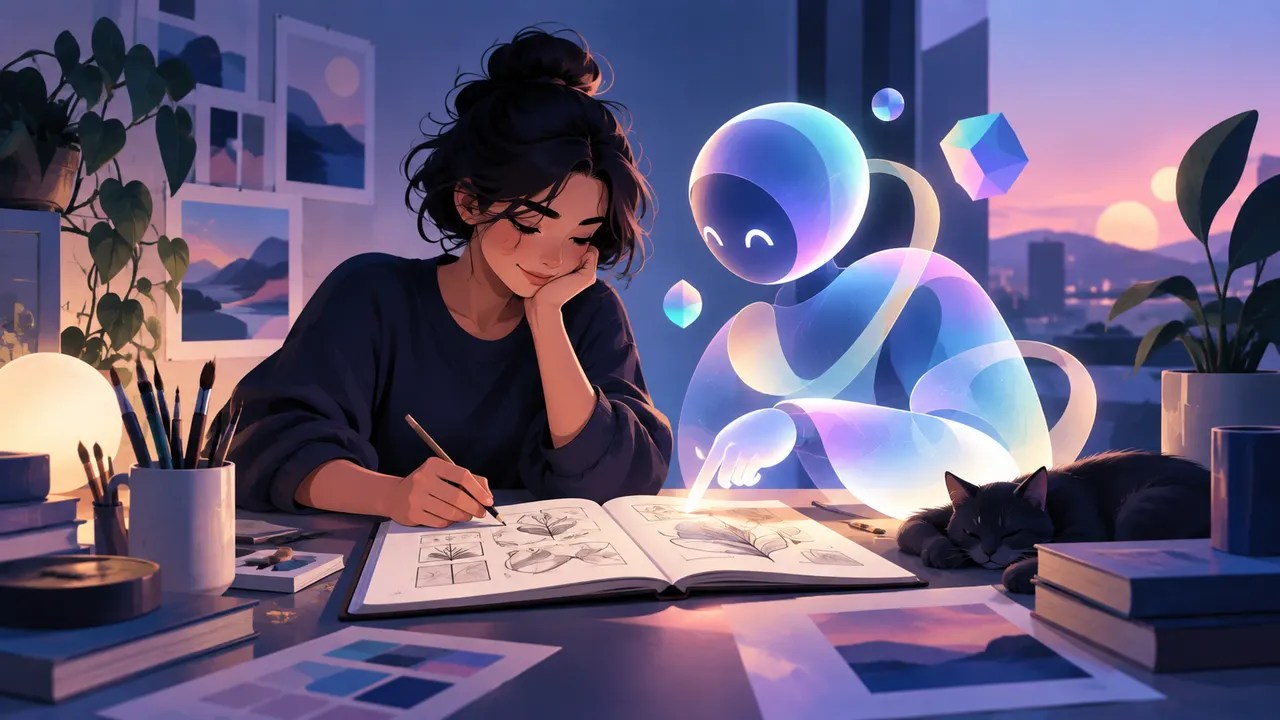
Artificial intelligence is already changing how we find ideas, create images, write, and learn. These changes do not replace human imagination. They give it new tools, speed, and room to experiment.
The world will not be the same
In the past, moving from an idea to a first sketch could take days. Today, AI can help gather references, explore compositions, improve a draft, translate a description, and reveal several creative directions in minutes. It changes the routine around creativity, not the value of creativity itself.
For artists and designers, the most meaningful shift is having more time for judgement, taste, storytelling, and connection with an audience. A person still decides which idea matters, which result is honest, and what is worth sharing.
What AI is and how it can help
AI is software trained to identify patterns in large amounts of data. It can work with language, images, sound, and code. In creative work, it can be a brainstorming partner, editor, researcher, and a way to speed up early drafts.
- It can help develop an idea and make a creative brief clearer.
- It can suggest titles, descriptions, and publishing plans.
- It can help organise a text, script, or project outline.
- It can explain a new technique in simpler language.
- It can reduce repetitive work, leaving more time to create.
What to know about AI honestly
AI has no personal experience, feelings, intentions, or taste of its own. It does not automatically know what is true. It can make mistakes, miss important context, and present incorrect information with confidence.
The strongest work comes from collaboration: people set the purpose, verify facts, make decisions, and remain responsible for the final result. Never share client data, passwords, private material, or someone else’s work with an AI tool without permission.
Creativity remains human
Tools change, but meaningful work still begins with curiosity, observation, and a personal point of view. Let AI handle part of the technical effort while the creator keeps the idea, the choice, and the responsibility. That is how technology can help us create more without losing ourselves.